Forgotten Sitcoms: "Dave's World"

The final episode of "Dave's World" aired on CBS the night of June 27, 1997.
And I'll bet you a quarter that the last time you thought about "Dave's World," if you have thought about it at all, was on June 27, 1997.

"Dave's World" ran on CBS from 1993-97. Four seasons, 98 episodes. It was based on the work of Dave Barry, a newspaper columnist. (Remember them?) Specifically it was based on two books by Barry -- beyond that he had nothing to do with the show, which is a shame, because he's a pretty funny guy.

(Side note: One of my favorite Barry lines came in a column about being awakened at dawn by his toddler. Barry's wish was that someone would create an early-morning TV show for kids called "Let's Go Back to Bed.")

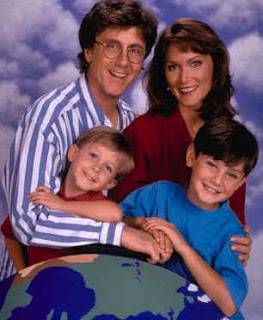
Harry Anderson, late of "Night Court," played Dave Barry, a columnist with a Miami newspaper. DeLane Matthews played Beth, his wife. (They stayed together all four seasons, even though in real life Dave and Beth split during the show's run.) Meshach Taylor, late of "Designing Women," played Dave's lifelong friend Sheldon, a plastic surgeon. Shadoe Stevens, late of "Hollywood Squares," played Dave's editor, Kenny. J.C. Wendel played Dave's assistant, Mia.

If "Dave's World" had any kind of ratings success, it was due to its location on the CBS schedule. It aired on Monday nights, nestled snugly between two popular shows -- "Evening Shade" and "Murphy Brown." It finished the season tied with "The Fresh Prince of Bel-Air" in 21st place. It stayed in the same slot the next season, sandwiched between "The Nanny" and "Murphy Brown," and again finished in 21st place.

In the fall of 1995 "Dave's World" was moved to Wednesdays, and the slide began. The show fell out of the top thirty, and Patrick Warburton was added to the cast as a love interest for Mia.

Then came the end -- a move to Friday nights for the 1996-97 season. Competition was tough -- this was the heyday of ABC's TGIF sitcom lineup that included "Family Matters," "Sabrina the Teenage Witch" and "Boy Meets World." "Dave's World" kicked off the night for CBS, followed by a new show, "Everybody Loves Raymond." "Dave's World" was yanked in January, with remaining episodes burned off in the early summer. "Everybody Loves Raymond" was saved by a move to Monday nights.

"Dave's World" received one Emmy nomination -- in 1996, for Outstanding Cinematography for a Series. Congratulations, Tony Yarlett! Sorry you didn't win. Its theme song was Billy Joel's "You May Be Right," performed by Southside Johnny. But because of rights issues, you won't hear it on the DVDs of the show. And as far as DVDs go, only three of the show's four seasons are available. There is no discernible online outcry or petition to make season four happen.

Screen Capture Theatre: "The Hindenburg," or It's Hard Out Here for a Blimp

We go once more into the breach with Screen Capture Theatre and explore the 1975 film "The Hindenburg." Please fasten your seat belts and grab your sickness bags. 

Gutentag and welcome aboard the Hindenburg,
Germany's glorious lighter-than-air craft powered
solely by the bottled ecstasy of Hitler youth! 


The Hindenburg is the ultimate in transatlantic travel,
1937-style. The amenities are so posh, you'd think you
were on the Titanic! Elegant salons, cozy bedrooms,
sleek observation decks -- and don't forget the Sunday
Night Sauerkraut Supper!


Naturally, such a majestic craft has an impressive guest list,
beginning with Col. Erich Von Blowheim, the reluctant Nazi.


Blowheim is on board to foil the plot of a saboteur, and to
go through everyone's luggage as often as possible. 


Also aboard is the Countess von Mrs. Robinson, who keeps
calling Blowheim "Benjamin" in honor of a lost love.


And then there is LeBeau from "Hogan's Heroes" --


-- and future Gil Grissom from "CSI."


Meanwhile, in America, officials are anxiously awaiting the
Hindenburg's arrival. Says one: "Its like landing a crate
of eggs. A boobytrapped crate of eggs. A boobytrapped
crate of eggs balanced on the back of a bucking horse.
A boobytrapped crate of eggs balanced on the back of a
bucking horse in a windstorm. A boobytrapped ..."  


Meanwhile, back at the Hindenburg ...


... LeBeau is offering a one-man performance of
"Fiddler on the Roof."


The Nazis are so offended they clear the room.
Or maybe it's just excessive flatulence from the Sunday Night
Sauerkraut Supper. 


As the Hindenburg nears its New Jersey destination,
Blowheim is getting tired of re-folding everyone's
underwear.


But then he finally finds the explosives that will destroy
the Hindenburg! Can he defuse the bomb in time? 


(Spoiler alert.)

Podcast: When Louis Met Dolly

When Louis Armstrong first saw the sheet music for "Hello, Dolly," he was in low spirits. It was just 11 days after the assassination of President John F. Kennedy and Armstrong was in a career lull. He also didn't think much of the song. But he recorded it like the pro he was, and while he was off playing other gigs, it displaced the Beatles as America's top pop song. It also helped Armstrong transition from a jazz pro into a pop-music idol.

Sources:

Pops: A Life of Louis Armstrong, by Terry Teachout

What a Wonderful World: The Magic of Louis Armstrong's Later Years, by Ricky Riccardi

The Horror! Scary Made-for-TV Movies of the 1970s

When I was writing my "Incredible Inman" column I received a lot of questions about made-for-TV movies of the 1970s -- scary ones, specifically. Here are the top five, from the bottom up:

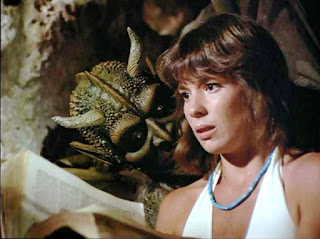
5. "Gargoyles" (originally aired November 21, 1972 on The New CBS Tuesday Night Movies): Set in the American Southwest, this story is about what happens when an expert on demonic mythology (Cornel Wilde) and his daughter (Jennifer Salt, at left) come into possession of a horned skull that the locals claim is from a gargoyle. This leads to an encounter with gargoyles, gargoyle eggs, and a gargoyle queen. The film's eerie visual style (the movie was released theatrically in Europe) and the creepy costumes (shout-out to the head gargoyle, played by Bernie Casey) embedded themselves in the memories of millions of terrified teenyboppers.


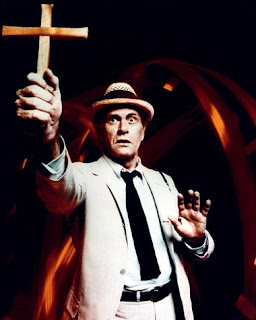
4. "The Night Stalker" (originally aired January 11, 1972 on ABC Movie of the Week): Upon its original airing, this vampire story set in Las Vegas became the highest-rated TV movie ever, leading to a 1973 sequel and a short-lived TV series. Darren McGavin plays Carl Kolchak, a disheveled reporter covering a series of murders where all the victims have been drained of blood. With the help of his girlfriend (Carol Lynley), Kolchak finally realizes that the killer is a vampire. This movie was a great favorite of Chris Carter, creator of "The X-Files," and he cast McGavin as the Kolchak-like Arthur Dales on the show.


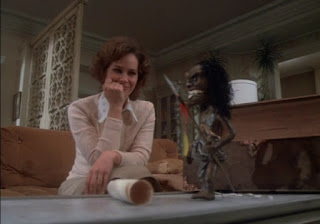
3. "Trilogy of Terror" (originally aired March 4, 1975 on ABC Movie of the Week): Based on three short stories by Richard Matheson (who also adapted the screenplay for "The Night Stalker"), it is the final story, "Amelia," that has become the most notorious, thanks to the presence of a very determined little Zuni fetish doll determined to kill its terrified owner (Karen Black). If you've never seen the movie, that plot may sound too goofy to be scary. It isn't.


2. "Bad Ronald" (originally aired October 23, 1974 on ABC Movie of the Week): When Bad Ronald (Scott Jacoby) accidentally kills a little girl, his bad mother (Kim Hunter) does the natural thing -- she renovates her house so that he can hide within the walls and elude the authorities. Then she dies and the house is rented by the Wood family -- mother Pippa Scott, father Dabney Coleman and three teenage daughters. All of them begin wondering why food suddenly starts disappearing and why there are noises inside the walls, and Mr. and Mrs. Wood plan to deal with the problem just as soon as they leave their daughters at home and take an out-of-town trip!

1. "Don't Be Afraid of the Dark" (aired October 10, 1973 on ABC Movie of the Week): All you need to know about this film is that Guillermo del Toro produced a 2010 remake because he loved it so much as a kid. Kim Darby plays Sally, a woman who inherits her grandmother's house and, despite warnings, is bound and determined to open an old bricked-up fireplace where demons live who are determined to make her one of them. Del Toro says that as a kid, he and his siblings mimicked the movie by whispering "Sally, Sally" to scare each other.


What are your nominees for scariest made-for-TV movie? Let me know! 

Screen Capture Theatre: Zero Hour!, or Plane Crazy

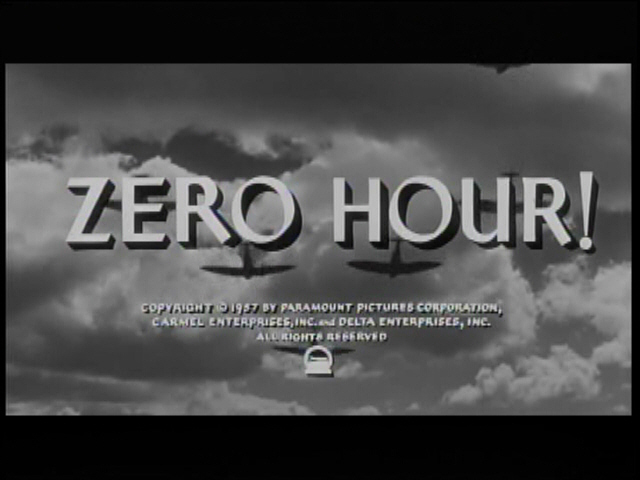
On Screen Capture Theatre we condense a movie into a concise, but thrilling, handful of images. Today we feature the first airplane disaster movie, "Zero Hour," from 1957. A great film tells its story solely through visuals. And I guess "Zero Hour!" does, too.

Herewith we present the film in a unique pictorial form utilizing pictures of a visual nature designed to tell the story through images in a visual, pictorial manner that includes the use of pictorial images that are visual.


Our story begins on a beautiful day during World War II.


Dana Andrews plays Ted Stryker, a World War II squadron leader who
caused all of his men to crash. A lot. Now he is haunted and stuff.


Stryker's wife (Linda Darnell) is tired of having a haunted husband,
so she has taken son Bobby and left Stryker. Little does she know that the plane they have boarded is on a flight to disaster, with a quick connection at Kansas City.
 

In pursuit of his wife and son, Stryker boards the same plane and ends
up sitting 
next to Rob Petrie's neighbor, Dr. Jerry Helper.


Bobby visits the cockpit, where co-pilot Clutch Cargo gives him a toy plane.


Jerry Helper has a neurotic condition where he can talk only through his
puppet, Dr. Yarnfinger. When asked whether he wants halibut or lamb chops for dinner, Dr. Yarnfinger chooses lamb chops. Well played, Dr. Yarnfinger.


The special effects could be better.


Turns out most of the passengers and both of the pilots have eaten
bad halibut and have food poisoning. To save his family,
Ted Stryker must fly a plane again!


Unfortunately, it's been so long since Stryker flew that he's forgotten
where his ears are -- and that, for best results, a pilot's eyes must be open.


And yet Stryker's wife bravely supports him every step of the way.


Stryker gets off to a rough start, and knows that only one man can help him ...


... Gen. Jack D. Ripper. He knows Stryker's history, and even gave him an
affectionate nickname -- "cowardly pilot-killing incompetent sissy who
 crashes a lot." He is the ideal man to instill confidence in Stryker.


A doctor on board tries to distract the passengers with a singalong:
"Who knows 'The Wreck of the Edmund Fitzgerald'?"


The passengers seem calm ...


"Dr. Yarnfinger ate halibut off of someone's plate and he
has food poisoning, too. He's doing weird things down my sleeve."
 

Ripper tells Stryker that thanks to the potency of his bodily fluids, he's doing a great job, and pay no attention to the hundreds of emergency vehicles lining the runway. They're just curious because they've never seen a disastrous crash before.

 
Finally the plane makes a smooth, relaxed landing.


And who knew this was one of those experimental planes
that used fire instead of landing gear?


Somebody's gettin' a little somepin-somepin tonight, oh yeah.


"Wait till Dr. Yarnfinger tells Millie about this!"


Grandma Dixie Is on the Air!: The Story Continues


My Grandma Dixie was a working musician in the Louisville area from the 1930s until the early 1980s, winding up her career with a weekly gig at the Louisville Boat Club, if memory serves. Her ability to play piano by ear led to her popularity and steady employment over those decades. One of the musicians she performed most often with was Clayton "Pappy" McMichen, leader of the Georgia Wildcats (the group, sans Dixie, is pictured above). Here's a recording from March 1941 of Dixie and the group, with her on vocals and doing a piano solo, playing a kind of country swing song called "I'm a Goin.' " After not hearing her voice in a long time -- she passed in 1998 -- it's a kick for me to hear this. And hey! The song isn't bad, either.

I'm a Goin' (March 3, 1941, WAVE radio -- from Berea College Special Collections and Archives)

Even after she stopped playing for money -- and was made a lifetime member of the local Musician's Union -- Dixie could always be coaxed to sit down and play something at our family gatherings. (Especially if a cold Sterling Beer was involved.) I have some video recordings of her family performances from the mid-1990s. I'll post them when I can dig them up. 

Grandma Dixie Is on the Air!

My dad's mother grew up in Missouri in the early 1900s, and she had a unique talent -- she could play piano by ear. She could hear a song and then, instinctively, pound it out on a keyboard. No training. No lessons. This became her livelihood -- she first earned money accompanying silent movies, and during the Great Depression she helped support her family by playing gigs all over Louisville, often as Dixie Lee. She played on the radio. She played with touring bands, including Clayton "Pappy" McMichen and His Georgia Wildcats, and Cliff Gross and His Texas Cowboys. She played "The Star Spangled Banner" before wrestling matches at the Louisville Armory. She performed with nationally-known musicians who would play the National Theatre, which was located at the corner of Fifth and Walnut streets downtown. (Walnut is now Muhammad Ali Boulevard.) And in 1950, Dixie Lee was part of a morning radio show that originated at a Louisville restaurant -- part of a group, according to Variety, "who have been kicking around this area on hillbilly shows and nitery floors for many a year." Here's the review from Variety:


More to come on Grandma Dixie and her colorful career.


Encore Podcast: The Rise and Fall of "Dragnet"


In the summer of 1949, "Dragnet" premiered on NBC radio. It was a show that sounded like no other thanks to creator-star Jack Webb's obsession with authenticity. "Dragnet" then moved to TV and ran for most of the 1950s. Its theme song and opening disclaimer -- "The story you are about to see is true; the names have been changed to protect the innocent" -- became part of pop culture history. During the turbulent late 1960s, "Dragnet" was revived, and it hadn't changed -- but the world had, and authority was something to be questioned rather than celebrated. We look at the influence of "Dragnet" and Webb's evolution into an outspoken advocate of police officers.

Who Shot J.R.? The Plot Heard Round the World


On this podcast, we review the hottest TV story during the summer of 1980, and how it introduced the season-ending cliffhanger to series TV. Also: "Funkytown."

"Lou Grant" Meets Old Hollywood

My favorite episode of "Lou Grant" is this one: "Hollywood," which first aired in early 1980, written by Michele Gallery.


The guest cast alone would make any old movie fan perk up:


As city editor of the Los Angeles Tribune, Lou (Edward Asner) leads his reporters (Robert Walden, Linda Kelsey, Daryl Anderson) in an investigation of a long-unsolved Hollywood murder. The guest stars each have a scene or two, except for Foch, as the reclusive owner of the restaurant where the murder occurred. Foch was Emmy-nominated for her performance; composer Patrick Williams won an Emmy for the episode's haunting theme. 
   

Encore Podcast: Elvis Presley -- Year One


Elvis Presley wasn't born in 1956, but his career was. He began the year barely known outside the south, but under the management of Col. Tom Parker he spent the year making his mark on TV variety shows hosted by Milton Berle, Steve Allen and Ed Sullivan; and his recordings for RCA, beginning with "Heartbreak Hotel," dominated the pop charts. By the end of the year he was arguably the best-known entertainer in America, with broader fame still to come.

New Podcast: Life According to "Hey, Arnold!"


My daughter Nora joins me to talk about what was probably her (and my) favorite Nickelodeon animated series when she was a kid -- "Hey, Arnold!" We talk about the show's philosophy of diversity as strength and review some memorable episodes, including "The Stoop Kid," "The Pigeon Man," "Ghost Bride" and "Helga on the Couch," detailing the life of' Arnold's truest love/fiercest enemy, Helga Pataki.